
Beyond the Silicon Ceiling: Could Probabilistic Computing Fuel the Next AI Leap?
What if AI’s next leap comes from computing differently, not just computing more?
I started looking into running some local models for Arin OS and a few other productivity tools I’ve been building.
That’s when I realised something slightly uncomfortable: my supposedly high-end laptop isn’t particularly high-end when it comes to serious AI workloads.
So I started looking at GPUs.
Then I saw an RTX 5090 listed for around ₹5.2 lakh.
That made me stop.
Not because it isn’t powerful. It obviously is. But ₹5.2 lakh for a single GPU is a hell of a lot of money. And depending on the model, context size and precision, one GPU will not even be enough. Before long, you’re talking about multiple GPUs, distributed systems and a lot more power.
And the uncomfortable part is that even that hardware eventually becomes outdated.
So I started wondering: where exactly is this going?
If every major leap in AI requires more GPUs, more electricity and bigger data centres, can we really keep scaling classical computing indefinitely?
That led me to a slightly different thought.
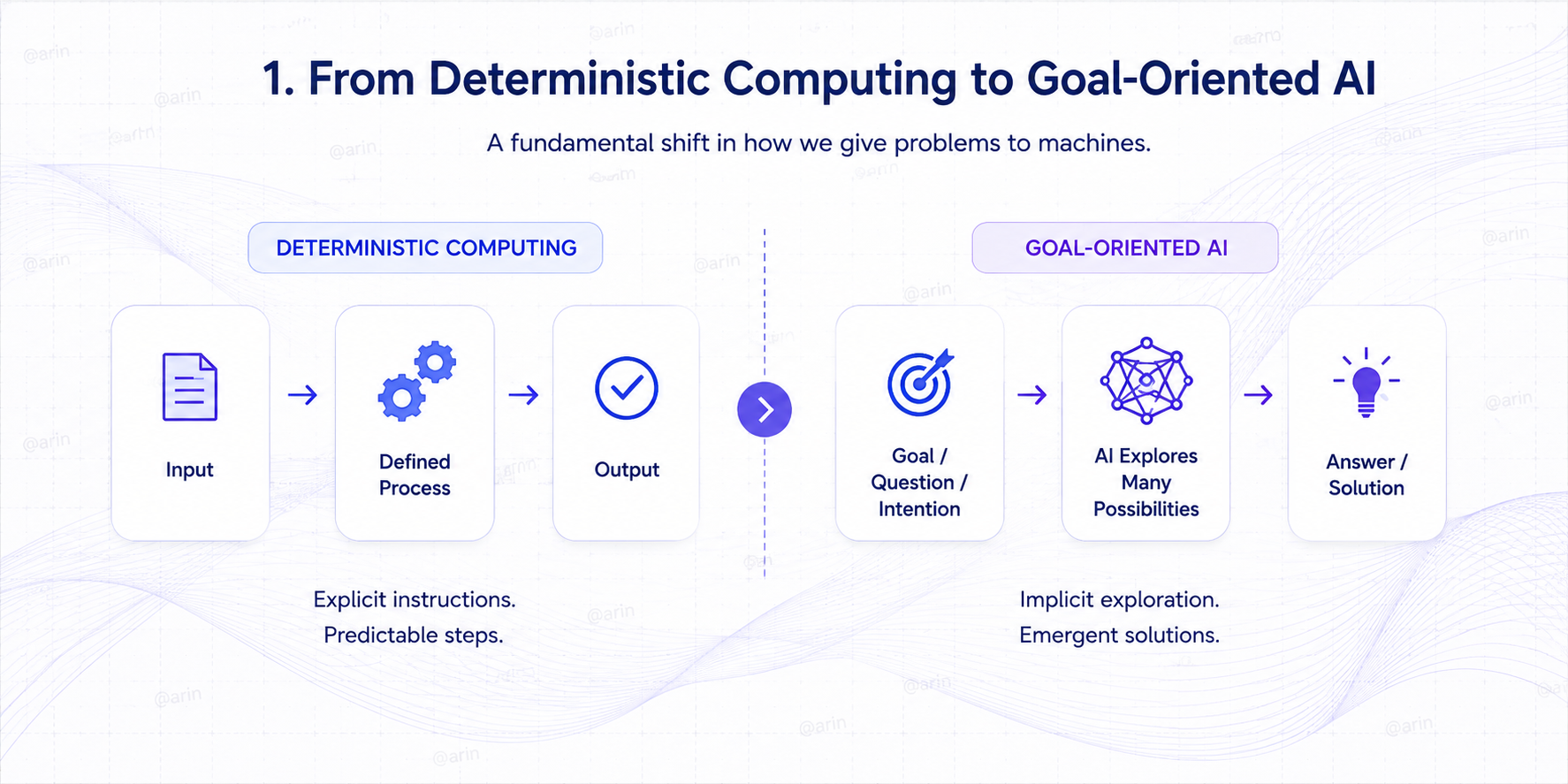
For decades, we have been trapped in a cycle of deterministic growth. We provide a machine with an input, it follows a rigid, step-by-step process, and it delivers an output. Today, this trajectory has led us to a massive "Silicon Ceiling." We are currently obsessed with scaling this classical model to its breaking point, pouring billions into sprawling data centers and consuming staggering amounts of energy to sustain AI growth. But as we push the limits of classical hardware, we must ask: is building a "bigger" version of the same machine truly the path to the next breakthrough, or are we simply hitting a hidden wall of innovation?
The Intentionality Shift: From Rote Logic to Neural Exploration
A fundamental transformation is occurring in our relationship with machines. In the traditional model, humans were the architects of every single instruction. With modern AI, we have moved from providing explicit directions to providing "intent." We give the machine a goal, a question, or a destination, and it navigates a vast landscape of possibilities to find the answer.
This shift is the ultimate precursor to a hardware revolution. Classical chips were architecturally designed for the era of step-by-step logic. When our mode of computing shifts toward exploring infinite possibilities rather than following linear paths, the deterministic foundation of silicon becomes a structural bottleneck. We aren't just calculating anymore; we are exploring—and an exploratory mind requires a more capable house than a calculator can provide.
The Scaling Paradox: Why More Isn’t Always Better
The current hunger for AI has pushed classical infrastructure to an extraordinary, almost unsustainable scale. The demand for processing power, memory, and energy is reaching a point of diminishing returns. While the industry is currently focused on sheer size, raw scale is rarely the driver of a true paradigm shift.
The next leap won't come from simply adding more of the same. As the limitations of classical scaling become more apparent, the focus must shift from the size of the computer to the fundamental nature of the computation itself.
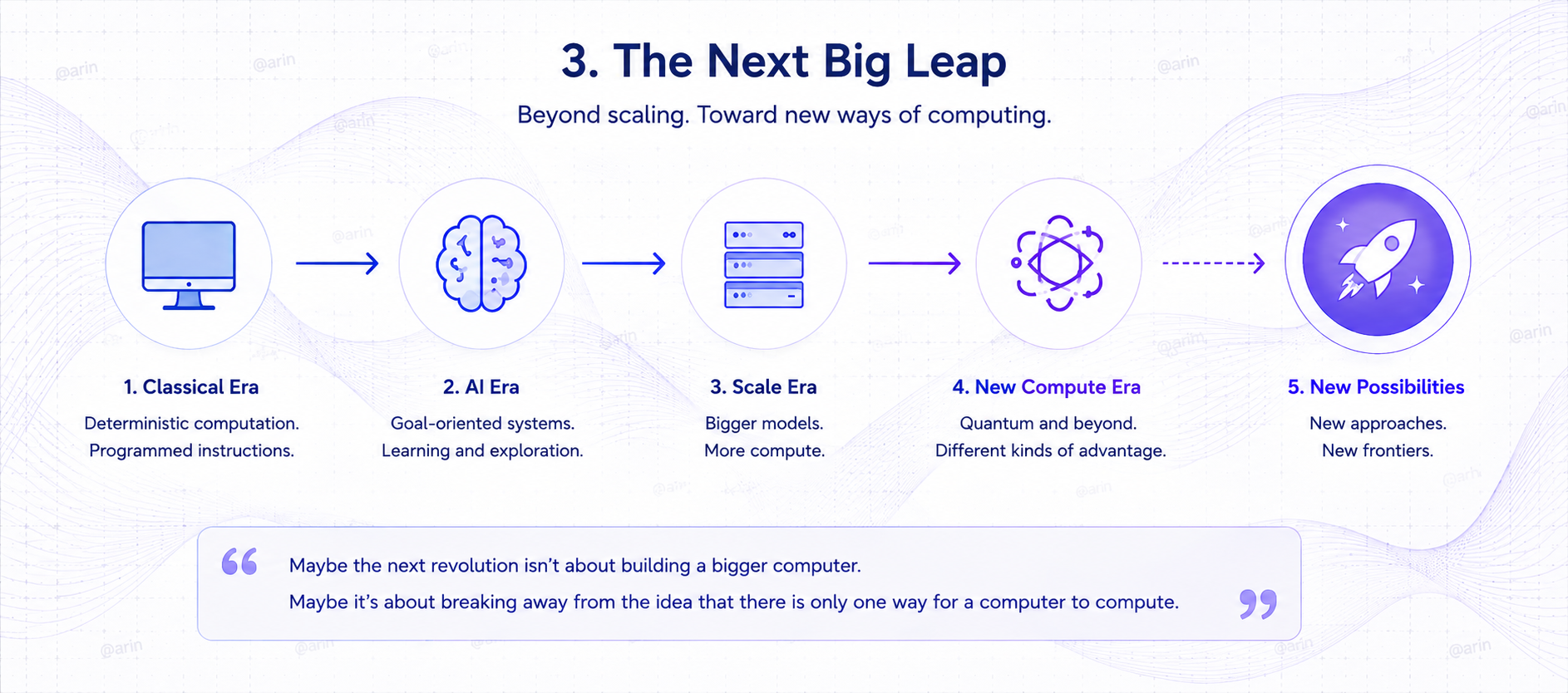
"Maybe the next technological revolution is not about building a bigger computer."
The New Orchestration: Quantum as the Specialist Architect
As we look beyond current limitations, quantum computing emerges not as a replacement for our current tools, but as a specialized master of complexity. Quantum processors operate on a model that defies classical logic, utilizing superposition and interference to navigate specific classes of problems that are fundamentally inaccessible to even the largest supercomputers.
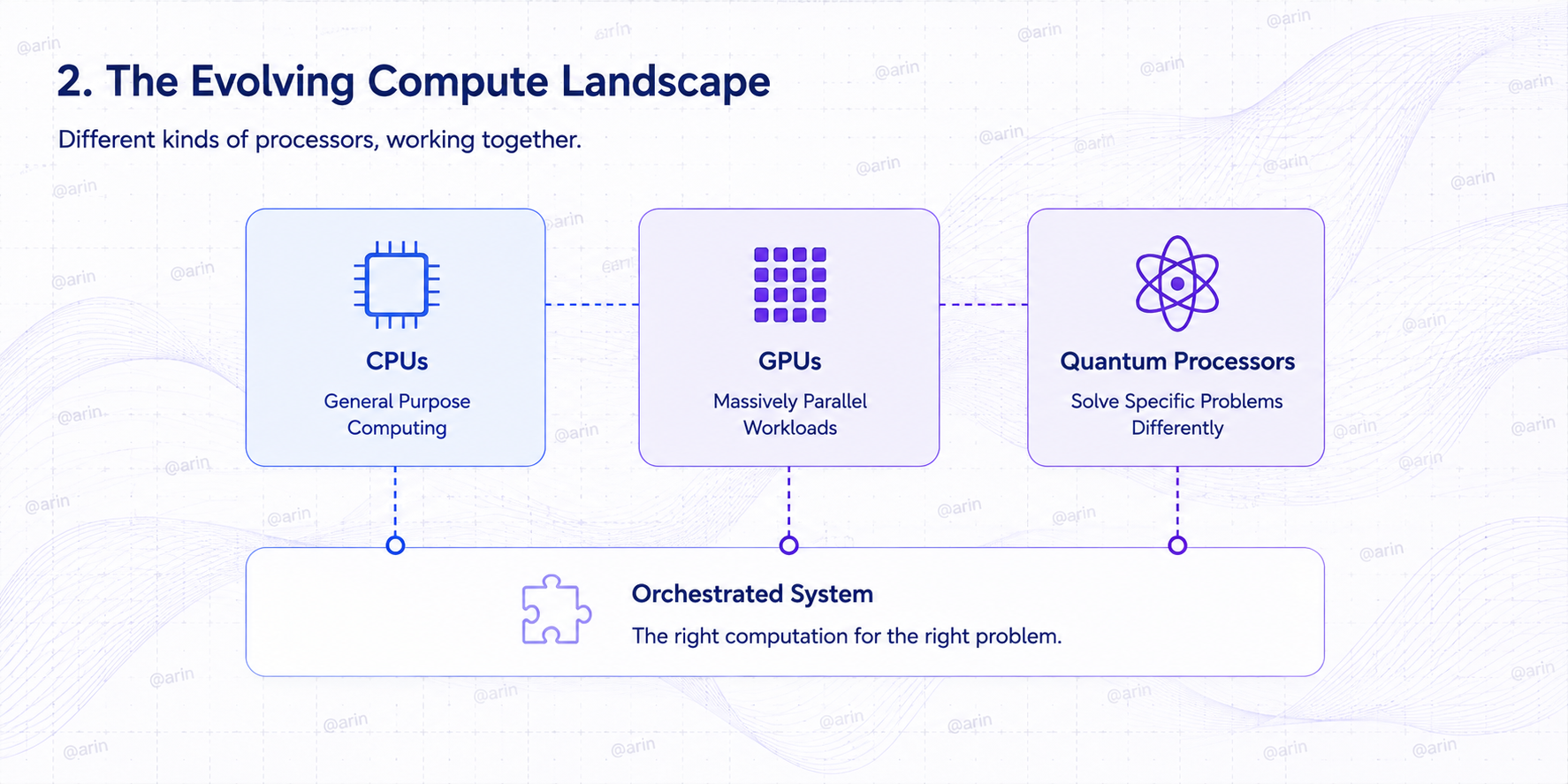
The future of intelligence will be defined by a diverse computing ecosystem, an orchestration of specialized strengths:
CPUs will remain the bedrock of general-purpose logic.
GPUs will continue to drive the massively parallel workloads of today’s neural networks.
Quantum Processors will be deployed as specialists, intervening when quantum effects offer a unique advantage in solving non-linear problems.
Navigating Complexity: Breaking the Monolith
The most provocative realization of this new era is that there is no "single" way for a computer to compute. We have been tethered to a monolithic idea of computation for roughly seventy years of mainstream computing. The true revolution lies in breaking away from this dogma.
By merging AI with new forms of computation like quantum, we gain the ability to navigate complex possibilities in ways classical logic cannot even map. This isn't a race for raw speed—it’s an expansion of capability. It is about doing things that were previously impossible, not just doing the same things faster. The ability to explore these landscapes in fundamentally different ways is the core of the next technological age.
The Twilight of Determinism
We are witnessing the end of the single, deterministic path. The future will not be defined by a bigger version of the same box, but by a symphony of diverse computational models working in tandem.
As these new approaches to computation emerge and fuse with AI, we are forced to confront a deeper shift in our own understanding. We must ask ourselves: Are we ready to abandon our decades-long reliance on a single way of thinking and fundamentally reconsider what a "computer" actually is?

